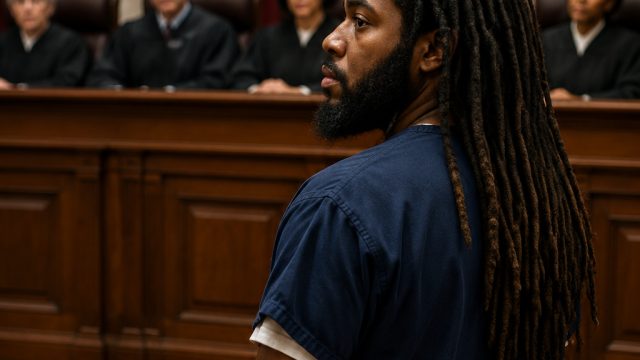
In a significant ruling that raises questions about religious freedoms in correctional facilities, the Supreme Court has decided against Damon Landor, a Rastafarian inmate who sought to hold prison officials accountable for forcibly shaving his dreadlocks. This decision not only underscores the complexities of religious rights within the prison system but also highlights ongoing debates about the treatment of inmates and their beliefs.
Damon Landor, who identifies as a Rastafarian, argued that having his hair cut against his will infringed upon his religious beliefs. Rastafarianism places a strong emphasis on the cultural significance of dreadlocks, which are viewed as a symbol of faith and resistance. The case was filed in the wake of an incident where prison guards forcibly shaved Landor's head, leading him to claim violations of his First Amendment rights.
In a 6-3 decision, the Supreme Court rejected Landor's appeal, stating that while the First Amendment guarantees freedom of religion, the prison environment presents unique challenges that allow for certain limitations on these rights. The majority opinion emphasized the need for prison officials to maintain order and security within their facilities, suggesting that the interests of the institution sometimes outweigh personal religious expressions.
This ruling has far-reaching implications for inmates across the country. It sets a precedent that may allow correctional institutions to impose restrictions on religious practices, particularly those that are visibly expressed through personal appearance. Legal experts suggest that this decision may lead to further challenges for inmates seeking to protect their religious rights.
The reaction to the Supreme Court's decision has been mixed. Civil rights advocates decry the ruling as a setback for religious freedoms, arguing that it undermines the essence of the First Amendment. On the other hand, some officials within the correctional system argue that maintaining order is paramount, and that allowing an array of religious expressions can complicate prison security and management.
The Supreme Court's ruling serves as a reminder of the ongoing struggle for religious rights in the correctional system. Inmates who identify with specific faiths may find themselves increasingly vulnerable to institutional policies that favor security over personal beliefs.
With this ruling now established, legal experts anticipate that similar cases may arise as inmates seek to contest restrictions on their religious practices. Potential areas of conflict could include:
The Supreme Court's decision against Damon Landor may have immediate implications for religious rights within the prison system, but it also opens the door for broader discussions about the balance between security and faith. Advocates are calling for a re-evaluation of policies that govern religious expression in prisons, urging lawmakers and officials to engage in constructive dialogue about how to accommodate diverse beliefs while ensuring safety. As the landscape of inmate rights continues to evolve, it is crucial for all stakeholders to consider the implications of this ruling, not just for today, but for the future of religious freedom for all incarcerated individuals.

The Role of B2B Platforms in E
Learn how B2B platforms are tr...(116 ) viewsTime:2026-07-09
The Future of Trade: Trends to
Stay ahead of the curve with o...(68 ) viewsTime:2026-07-09
The Future of B2B Trade: Innov
Discover the innovations trans...(50 ) viewsTime:2026-07-09
Navigating the Future: How Exp
Explore how emerging export tr...(169 ) viewsTime:2026-07-09