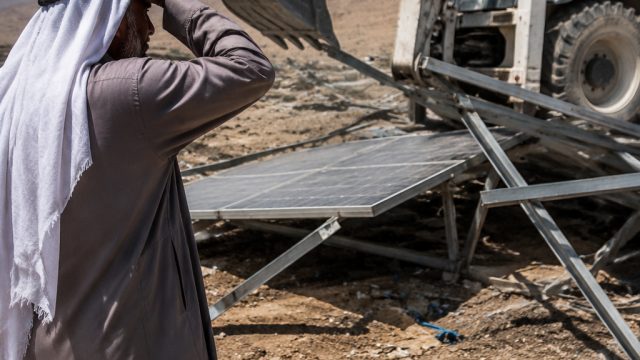
In a troubling escalation of tensions in the Occupied Palestinian Territories, Israeli forces recently confiscated essential agricultural equipment in Khirbet al-Deir, located in the northern Jordan Valley. This situation not only raises concerns about the immediate impact on local farmers but also highlights the broader implications for agricultural sustainability and energy independence in the region.
On June 24, Israeli forces carried out a raid in the northern Jordan Valley, seizing crucial items such as solar panels, water pumps, and irrigation equipment. These resources are vital for local farmers who have increasingly relied on alternative energy sources and methods due to the stringent restrictions on well digging and access to the national electricity grid.
This incident is not just a local issue but reflects ongoing tensions that affect agricultural practices and sustainability across the region. The confiscated equipment is essential for irrigation, which is critical in an area where water scarcity is a significant concern. Farmers in the Jordan Valley depend on such equipment to maintain their livelihoods, and the loss of these resources can lead to severe economic hardships.
The confiscation of solar energy equipment and irrigation systems disrupts not only immediate agricultural operations but poses a threat to the long-term viability of farming in the region. Local farmers have adopted solar energy as a sustainable solution to power their irrigation systems, especially in light of the unreliable access to conventional electricity sources.
This situation calls for increased international attention and support for farmers in the Jordan Valley. Advocacy groups and human rights organizations are urging governments to address these violations and to support local communities who face ongoing challenges due to restrictive policies. The confiscation of agricultural equipment not only undermines the farmers' rights but also impacts the broader ecosystem and agricultural diversity.
As the global community becomes more aware of the struggles faced by Palestinian farmers, it is imperative to understand the broader implications of such actions. The ongoing conflict and its manifestations affect various aspects of life, including access to water, energy, and essential resources.
To mitigate the impact of such confiscations, various strategies can be implemented:
The recent confiscation of irrigation and solar energy equipment in the Jordan Valley serves as a stark reminder of the challenges faced by local farmers amidst the ongoing Israeli occupation. As these farmers struggle to maintain their livelihoods, the need for sustainable agricultural practices and international support becomes more critical than ever. This situation not only highlights the plight of individual farmers but also raises important questions about resource access and food security in the region. With international awareness and commitment to addressing these issues, there may be a path forward for a more sustainable and equitable future in the Jordan Valley.

Market Entry Strategies: Unloc
Learn about innovative market ...(72 ) viewsTime:2026-07-11
B2B Trade Shows: A Gateway to
Learn how to leverage B2B trad...(155 ) viewsTime:2026-07-11
Norwegian Fans Spark Hope in A
Explore the excitement as Norw...(105 ) viewsTime:2026-07-11
The Future of B2B Trade: Trend
Discover the key trends shapin...(66 ) viewsTime:2026-07-11