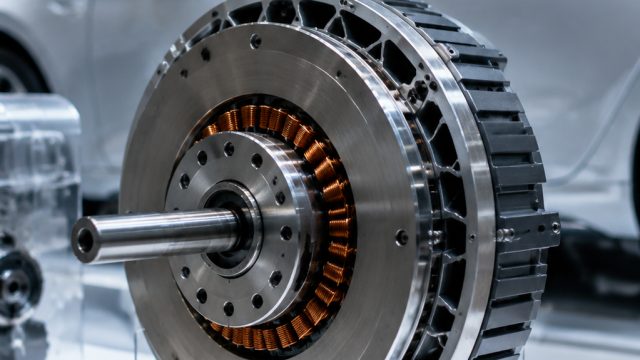
The axial flux motor industry is poised for substantial expansion, anticipated to reach approximately USD 4.97 billion by 2032. This surge is predominantly driven by a growing emphasis on electric vehicle (EV) adoption and increasing demands for high-efficiency drive technologies. As industries focus on sustainability and innovation, axial flux motors are emerging as a critical component in various applications, including aerospace and robotics.
Axial flux motors differentiate themselves from traditional rotary motors with their unique design, which allows for a more compact and lightweight structure. This design enhances energy efficiency, making them particularly suitable for electric vehicles where weight and space are critical concerns. As the automotive industry shifts towards electrification, axial flux technology is gaining traction, integrating into new vehicle models and retrofitting existing ones.
The electric vehicle market is experiencing explosive growth, with sales projections soaring as more consumers choose sustainable transport options. Governments worldwide are also pushing for stricter emissions regulations, further fostering the adoption of EVs. Axial flux motors, known for their high power-to-weight ratio, are becoming essential in the design of next-generation electric vehicles.
The push for high-efficiency drives in various sectors is significantly impacting the axial flux motor market. As industries pursue smarter solutions, the demand for motors that can operate at higher efficiencies without compromising performance has risen sharply. These motors are vital in applications that require precise control and reliability.
In aerospace, axial flux motors are utilized in a range of applications from propulsion systems to auxiliary drives, contributing to overall performance improvements and weight reductions. Similarly, the robotics sector benefits from the integration of these motors, allowing for more responsive and agile robotic systems.
Several key trends are shaping the future of the axial flux motor market:
The axial flux motor market is on the cusp of a transformative period, driven by the dual forces of EV adoption and the demand for increased efficiency across various industries. As technological advancements continue to evolve, these motors are expected to play a pivotal role in the future of transportation and robotics. The anticipated growth to nearly USD 5 billion by 2032 highlights the importance of this technology in shaping a sustainable future.
As we move towards this promising horizon, stakeholders in the automotive, aerospace, and robotics sectors should remain vigilant about emerging trends and innovations that will undoubtedly influence the fate of axial flux motors in the coming years.

The Future of B2B Trade: Trend
Discover key trends shaping th...(179 ) viewsTime:2026-07-10
France's Ambitious Quest for W
Explore France‘s strategy and ...(125 ) viewsTime:2026-07-10
Global Product Trends: What B2
Discover the top product trend...(159 ) viewsTime:2026-07-10
EU Lawmakers Demand Investigat
EU lawmakers push for an inves...(47 ) viewsTime:2026-07-10